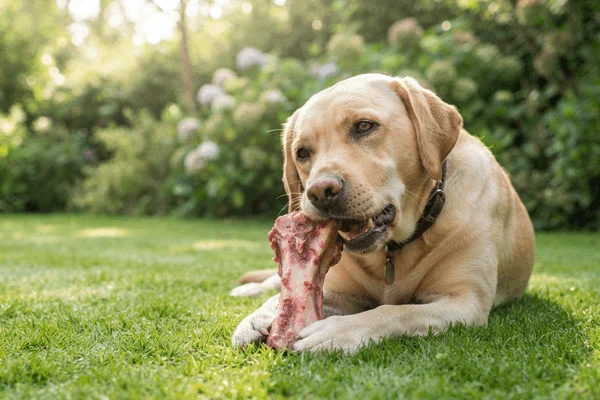
Why Do Dogs Eat Bones?
Dogs are natural carnivores with strong jaws and teeth designed to chew through raw meat, cartilage and bone.
Chewing raw bones can help to:
- Support healthy teeth and gums
- Exercise jaw muscles
- Provide mental stimulation
- Encourage natural chewing behaviour
- Supply valuable minerals such as calcium and phosphorus (when included as part of a balanced raw diet)
For many dogs, chewing a raw bone is also an enjoyable enrichment activity that helps relieve boredom.
Raw Bones vs Cooked Bones
This is the single most important rule every dog owner should remember
✅ Raw Bones
Raw bones are generally softer, more flexible and less likely to splinter when chewed appropriately.
Suitable examples include:
- Chicken frames
- Chicken necks
- Duck necks
- Turkey necks
- Lamb ribs
- Rabbit carcasses
- Raw meaty beef ribs (appropriate for larger dogs)
❌ Never Feed Cooked Bones
Cooking changes the structure of bone, making it brittle.
Never Feed:
- Roast chicken bones
- Cooked pork bones
- Cooked lamb bones
- Turkey necks
- BBQ bones
- Rabbit carcasses
- Leftover Sunday roast bones
No matter how large or small the bone, if it has been cooked, it should never be fed to your dog.
Which Raw Bones Are Safe?
The safest bones are those that are:
- Fresh
- Raw
- Meaty
- Appropriate for your dog's size
- Fed under supervision
Larger dogs may enjoy raw beef ribs or lamb ribs, while smaller breeds often manage chicken frames or duck necks more comfortably.
The bone should always be large enough that your dog cannot swallow it whole.
Edible Bones vs Recreational Bones
Understanding the difference is important.
Edible Bones
These are softer bones designed to be completely eaten as part of a balanced raw diet.
Examples include:
- Chicken wings
- Chicken frames
- Duck necks
- Turkey necks
- Rabbit pieces
These contribute nutrients including calcium and phosphorus.
Recreational Bones
These are larger bones intended mainly for chewing rather than eating entirely.
Examples include:
- Beef marrow bones
- Large knuckle bones
- Large beef ribs
They provide excellent mental enrichment but should not replace a balanced diet.
If a recreational bone becomes small enough to swallow or develops sharp edges, it should be removed.
Benefits of Feeding Raw Bones
When fed correctly, raw bones can offer several benefits.
Improved Dental Health
Chewing naturally helps scrape away plaque and tartar while stimulating healthy gums.
Although bones are not a substitute for routine dental care, they may contribute to better oral hygiene.
Mental Enrichment
Chewing satisfies a natural instinct and provides valuable mental stimulation, helping to reduce boredom.
Many owners find their dogs become calmer after enjoying an appropriate recreational bone.
Jaw Exercise
Working through meat, cartilage and bone helps strengthen jaw muscles and encourages natural chewing behaviour.
Nutritional Support
Edible raw bones provide important minerals that contribute to a balanced raw diet.
However, bones should always form part of a nutritionally complete feeding plan rather than being fed in excessive amounts.
How Often Should Dogs Have Raw Bones?
This depends on the type of diet being fed.
If your dog is eating a complete and balanced raw food, bone content is usually already included in the correct proportion.
Additional bones may be offered occasionally for enrichment, but too many can upset the nutritional balance.
If feeding a DIY raw diet, it's important to ensure bone content remains appropriate for your dog's age, size and nutritional requirements.
Moderation is key.
Can Puppies Eat Raw Bones?
Yes, many puppies can safely enjoy appropriately sized raw bones once they have started eating solid food.
Suitable options include:
- Chicken necks
- Duck necks
- Chicken wings (appropriate to the puppy's size)
Bones should always be introduced gradually and given under close supervision.
Never offer bones that are too large or too hard for a young puppy to manage.
Signs You're Feeding Too Much Bone
Too much bone can lead to digestive problems.
Watch for:
- Very hard or crumbly white stools
- Constipation
- Straining to pass stools
- Reduced appetite
If these signs appear, reduce the amount of bone and ensure your dog's overall diet remains balanced.
Safety Tips for Feeding Raw Bones
Follow these simple guidelines:
- Always supervise your dog.
- Feed raw—not cooked—bones.
- Choose bones suitable for your dog's size.
- Feed fresh, high-quality products.
- Remove bones that become small enough to swallow.
- Discard bones that become excessively dry or splintered through prolonged chewing.
- Always wash hands and clean feeding areas after handling raw food.
Safe food handling protects both your dog and your household.
Final Thoughts
Raw bones can be a valuable addition to a balanced raw feeding routine, offering dental benefits, mental stimulation and the opportunity for dogs to express their natural chewing instincts.
The key is choosing appropriate raw bones, avoiding all cooked bones, and supervising your dog throughout every chewing session.
If you're new to raw feeding or unsure which products are suitable for your dog, the team at TPMS Animal Feeds is always happy to offer guidance.
Whether you're introducing raw feeding for the first time or looking to expand your dog's diet safely, selecting quality raw products and following sensible feeding practices will help keep your dog happy, healthy and thriving.