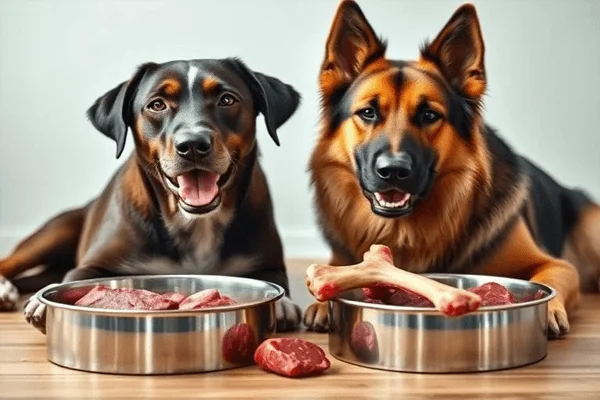
What is Raw Feeding for Dogs?
Raw feeding involves feeding dogs a diet made up of uncooked, natural ingredients that closely
resemble what their ancestors would have eaten.
A typical raw diet contains muscle meat, raw edible bones, organ meat.
BARF (Biologically Appropriate Raw Food)
BARF diets typically include:
- Raw meat
- Raw bones
- Organ meats
Why Are More Dog Owners Choosing Raw Feeding in 2026?
Raw feeding continues to grow in popularity throughout the UK as owners seek more natural
alternatives to highly processed foods.
Many owners report improvements in:
- Coat condition and shine
- Dental health
- Stool quality
- Energy levels
- Appetite
- Skin condition
However, results can vary between individual dogs, and feeding a properly balanced diet remains essential.
Benefits of a Raw Diet
1. Improved Dental Health
- Chewing raw meaty bones may help reduce plaque build-up and encourage healthier gums through natural abrasion. Many raw feeders report cleaner teeth and fresher breath.
2. Smaller, Firmer Stools
- Because raw diets often contain fewer fillers than many processed foods, dogs typically produce less waste.
3. Better Skin and Coat
- Many owners notice shinier coats and reduced skin irritation after transitioning to a balanced raw diet.
4. Greater Ingredient Transparency
- Raw feeding allows owners to know exactly what their dog is eating, avoiding many artificial additives and preservatives found in some processed foods.
How Much Raw Food Should You Feed?
A common starting point for healthy adult dogs is:
| # | Dog Weight | Daily Amount (Approx.) |
|---|---|---|
| 1 | 5kg | 100g - 150g |
| 2 | 10kg | 200g - 300g |
| 3 | 20kg | 400g - 600g |
| 4 | 30kg | 600g - 900g |
| 5 | 40kg | 800g - 1.2kg |
Most adult dogs consume approximately 2%–3% of their body weight per day, while puppies often require significantly more due to growth demands.
Remember that feeding requirements vary depending on:
- Age
- Activity level
- Breed
- Metabolism
- Health conditions
How to Transition Your Dog to Raw
Transitioning your dog to a raw diet should be a gradual process to ensure their digestive system
adjusts comfortably.
We've covered this in depth in our guide: Transitioning Your Dogs To Raw
Feeding.
Quick Tip: Start with a simple, single-protein source like chicken before introducing more variety like our Minced Ox Cheek or Tripe.
Common Raw Feeding Mistakes Beginners Make
Feeding Only Muscle Meat
- Dogs require more than just meat. A balanced diet includes bones and organs to provide essential nutrients.
Too Much Bone
- Excess bone can lead to constipation and chalky stools. Balance is important.
Not Rotating Proteins
- Offering a variety of protein sources can help provide a broader nutritional profile.
Feeding Cooked Bones
- Cooked bones should never be fed as they can splinter and create serious health risks. Raw edible bones are the recommended option.
Choosing Quality Raw Dog Food
When selecting a raw food supplier, look for:
- Clearly labelled ingredients
- Complete and balanced recipes
- Human-grade handling standards where possible
- Protein variety
- Reliable cold-chain delivery
At TPMS Animal Feeds, we stock a range of quality raw dog foods and natural feeding options to help owners provide nutritious diets for their dogs.